Automotive & Commercial Vehicles

— Engineering solutions for efficient software development for passenger and commercial vehicles, ensuring the highest levels of safety and reliability.

The automotive market is undergoing a major transformation—both the shift toward electric mobility and the development of highly automated vehicles present the industry with significant challenges, but also offer opportunities for repositioning.

The concept of the software-defined vehicle represents an approach that offers maximum flexibility to respond quickly to market demands while simultaneously meeting functional requirements. However, it requires new skills, processes, structures, and software architectures, and presents companies with significant challenges.

Innovative software and system solutions for the automotive industry

For 30 years, Fraunhofer IESE has been supporting companies with software and systems engineering solutions designed to boost development efficiency in the automotive and commercial vehicle industries, in research and pre-development, as well as in the transition to series production.

We continue to work on implementing new mobility concepts, from the planning phase with cities and municipalities through to implementation using smart city digital twins and intelligent data spaces.

  • Architecture, Development Processes, and Virtual Testing Environments

    Software-defined vehicles are the future. They offer flexible, updatable vehicle functions based on modern E/E architectures. Fraunhofer IESE is your expert partner for this transformation. We support you in everything from SDV architectures and continuous engineering to virtual testing, safety, security, and AI-driven development.

    Fraunhofer IESE supports the transition to connected and automated driving (CAD) and related digital ecosystems through research projects and targeted research transfer initiatives for industry.

    • Target architectures for software-defined vehicles and zonal E/E concepts
    • Hardware abstraction, APIs, and platform architectures for reusability
    • Architectural consulting on open source and ecosystem approaches

    Learn more

    Short release cycles and continuous updates require new development and testing approaches. Fraunhofer IESE supports the transition to CI/CD pipelines in development processes.

    • Virtual Testing Methods: MIL, SIL, vHIL, and Virtual Integration Environments
    • Building CI/CD pipelines for in-vehicle software development
    • Digital Twins and Co-Simulation with FERAL

    Learn more

  • Methods, Tools, and ODD-Based Security Analyses

    Highly automated vehicles place new demands on safety engineering. Complex functions, dynamic operating environments, and constant changes require model-based, integrated, and tool-supported approaches to ensure efficient and traceable validation.

    Fraunhofer IESE provides support using modern, model-based methods to systematically analyze safety risks, efficiently manage changes, and enable robust safety verification throughout the entire lifecycle.

    • Model-Based Safety Engineering with FMEA, FTA, and STPA
    • Safety Analysis and Change Management for Highly Automated Systems
    • Tool-based safety verification with safeTbox for mass production

    Learn more


    Cybersecurity is becoming a key factor in functional safety for highly automated vehicles. Fraunhofer IESE systematically integrates security aspects into safety analyses and supports the joint consideration of safety and security in methods and toolchains.

    • Incorporating Cybersecurity Risks into Safety Analyses (ISO/SAE 21434)
    • Integration of safety and security engineering into processes and toolchains
    • Support in assessing attack scenarios with safety implications

    Learn more


    AI methods enable significant efficiency gains in safety engineering. Fraunhofer IESE uses AI to analyze standards, requirements, and operating environments, as well as to automatically derive safety-related artifacts—while maintaining traceability.

    • AI-powered analysis of standards, guidelines, and safety artifacts
    • Support for ODD analysis and assessment of complex operational environments
    • Automated safety analyses to reduce effort and turnaround times

    Learn more

  • Security and Reliability of AI-Based Systems

    While AI can perform vehicle functions, uncertainty and a lack of transparency make it difficult to evaluate. We help you design reliable AI-based functions.

    We offer solutions for evaluating AI in vehicles, including uncertainty management, monitoring concepts, and robust modeling and validation approaches. Our goal is to make AI results transparent and to manage risks in a data-driven manner—even under dynamic operating conditions.

    • AI Uncertainty Management
    • Validation and Testing Approaches for AI
    • Risk KPIs and Monitoring for Trustworthy AI

    Learn more


    We securely integrate AI with safety concepts, conditional safety mechanisms, and dynamic risk management into system architectures. In addition, we provide support for verification and validation, as well as tool-based documentation for AI-based functions.

    • Safety Architectures for AI: Safety Supervisors, Degradation, and Fallback Concepts
    • Systematic verification and validation of AI functions, including scenarios, requirements, and evidence
    • Safety concept and verification for AI-based driving functions

    Learn more


  • The development of in-vehicle software is complex, safety-critical, and costly. AI techniques can provide targeted support to developers and engineers, thereby significantly reducing development effort and turnaround times.

    AI language models and data-driven methods support developers throughout the entire software engineering process. Fraunhofer IESE uses AI specifically to analyze documents, assist with implementations, and ensure compliance with norms and standards.

    • Analysis of requirements documents, specifications, and requests for proposals using AI
    • Use of language models to support coding and development patterns

    Learn more


    AI can help safety engineers manage complex safety requirements. In addition, AI methods support the automated generation, prioritization, and execution of test cases, helping to reduce testing efforts and increase test coverage in a targeted manner.

    • AI-powered support for safety analyses (e.g., HARA, conceptual design phases)
    • Automated consideration of norms, guidelines, and standards
    • Support in deriving safety-related requirements and artifacts

    Learn more


    To ensure that AI can be used safely in engineering, sensitive development artifacts must be protected and risks identified at an early stage. Fraunhofer IESE provides support in robustly securing AI-supported workflows, toolchains, and data flows.

    • AI-powered analysis of security incidents and known vulnerabilities
    • Support for assessing security risks in software artifacts
    • Automated analysis of safety-related documentation and reports

    Learn more


Contact us!

Are you interested in our services or research topics and would like to get in touch with us?


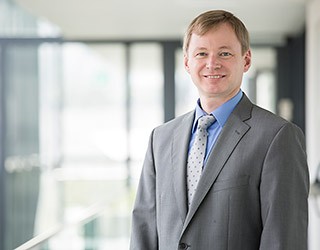
Our expert, Ralf Kalmar, would be happy to discuss this with you and put you in touch with our specialist department!

Ralf Kalmar

Contact Press / Media

Ralf Kalmar

Head of Business Development

Phone +49 631 6800-1603